
Seaforth Sanitorium / Seaforth Centre
Attribution: S. Fraser (Maryburgh Primary School March 2015)
Seaforth Sanatorium/Seaforth Centre
In 1900 over 10,000 Scots died from tuberculosis. TB represented 50% of all deaths from disease but little could be done to prevent it spreading or to cure the sufferers. Victims were denied hospital care as the disease was considered too infectious, and there was an element of their being social outcasts and of the condition being kept secret or denied.

Attribution: unknown
Colonel and Mrs Stewart-Mackenzie of Seaforth were extremely concerned about the poor health of the population and decided to build, maintain and equip a sanatorium for the treatment of consumption for the inhabitants of the county, so that sufferers might benefit from good food, rest and fresh air. They gifted £100,000 towards the project.
A site was allocated on Brahan Estate land, on a south facing hill above the village of Maryburgh, with views to the Cromarty Firth and the Black Isle. The foundation stone was laid on 27th November 1906 and the formal opening of the sanatorium took place on 16 January 1908.
Dr William Maclean, a native of Maryburgh, was appointed as the first Medical Superintendent in 1908. He had followed his medical studies by adding Doctor of Public Hygiene to his qualifications in 1899.
It was Dr Maclean’s opinion that patients had to be admitted in the early stages of the disease in order that he might help them. Added to this was the isolation of those who were healthy but infected. Success in treatment of patients was limited despite the BCG vaccine being available in 1924 and it was not until the introduction of antibiotics from 1944 onwards that the life expectancy of tuberculosis sufferers improved.
Coinciding with the building of the Sanatorium, Colonel and Mrs Stewart-Mackenzie funded the renovation of a derelict house, Maryburgh Cottage in Hood Street, so that Dr Maclean and his wife, Louisa, could have a suitable home. The three-bedroom property included a drawingroom, diningroom, conservatory and study, with modifications including electricity, a bathroom and adjacent garage. This was to be Dr Maclean’s lifetime home.
The Seaforth Sanatorium Memorial Stone
“The Seaforth Sanatorium has been erected and endowed for all time by Colonel James Alexander Francis Humberston Stewart-Mackenzie of Seaforth and his wife Mary Margaret for the treatment of phthisis patients belonging to the counties of Ross and Cromarty. AD1907.” [Note: phthisis – tuberculosis of the lungs.]
The Seaforth Sanatorium became a Military Hospital during ‘The Great War’ 1914-1918.

Memorial stone (surmounted by Mackenzie crest)
Attribution: unknown
Autographs from patients at Seaforth Sanatorium 1914
A fascinating legacy from this period is a collection of autographs signed by wounded soldiers. The soldiers seem to have come from different regiments, different ranks and even different countries.
Editor’s Note – We’ve done our best to transcribe the autographs which follow but there are a few inconsistencies that need to be clarified. We would be delighted to hear from anyone who can provide more information. Also, it would be great if someone could provide a link to military historians who might be able to trace the records of some of these soldiers. Please send any additional information to Ross and Cromarty Heritage Society.

Attribution: unknown
Seaforth Children's Home 1957-1965
Orphaned children of mixed ages, healthy and handicapped, were looked after by a Matron and Nurses. There were over 30 children altogether. The children of school age were taught in their own school, which was attached to the home (green building beside the diningroom). The first teacher there was Nancy Thomson from Strathpeffer and then Miss MacDonald. Visiting teachers came for other subjects, for example P.E. The gardens were kept and fresh vegetables supplied by Alick Chisholm, Rosehaugh Cottage, Maryburgh and Jimmy ? The children were taken to Maryburgh Free Church for worship. Matron MacLennan (Hopeman) ran the home and was a real caring person to all in her charge. Some of the persons who worked there:-
Nurses- Ann MacIntosh, Broomhill, Delny; Betty Sutherland, Munro Place, Dingwall; Maureen Donnelly, Culloden; Dorothy MacKay, Innisfree, Maryburgh; Heather Booth and her sister, Shirley Maureen Booth, Invergordon; Mary Ledingham, Invergordon.
Cook- Miss Bain, Beauly

Attribution: unknown
It always seemed sunny in the sanny
Newspaper article by James Henderson who looked back to the days leading to World War II when he was a young patient in the North’s Seaforth Sanatorium
PHTHISIS was a scourge in the early years of this century; but it was known as tuberculosis or “galloping consumption” when I was admitted to the Seaforth Sanatorium more than 50 years ago.
The neat and handsome building, erected on a terrace looking out over the little Easter Ross village of Maryburgh towards the Black Isle, has now been declared “surplus to requirements” by owners Highland Regional Council. It is to be offered for sale on the open market and likely to be demolished to make way for housing on a prime site above what is now the new highway to Ullapool from Inverness.
The white-walled hospital was erected in 1907 and “endowed for all time by Colonel James Alexander Francis Humberston Stewart-Mackenzie of Seaforth and his wife, Mary Margaret, for the treatment of phthisis patients belonging to the Counties of Ross and Cromarty”, according to the plaque over the main entrance.
Since then, it has nursed sick and terminally-ill adults and children, cared for wounded soldiers from World War I – a brass plate in the entrance hallway commemorates that role – healed the sick in mind and body and, for the past 30 years, has been a training centre for the less skilful in the community.
As a long-surviving example of the sanatorium’s healthy regime, I recently visited the place for the first time in many years, to ponder outside the yellow-painted corrugated iron shed which served as the school-room when I was a young patient there just before World War II. In there, listening to an accumulator-powered wireless set, I heard the manic ravings of Adolf Hitler from Munich. From the windows, I saw the Lovat Scouts being mobilised and, with their mules and ponies, leaving for Dingwall station to entrain for their posting. And it was from there that I was discharged, in August, 1939, with all the other young patients, to make way – just as so many hospital beds were emptied earlier this year for the Gulf War and, thankfully, not used – for expected casualties.
I was seven when our Caithness medical officer of health diagnosed a “shadow on the lung” and booked my place in the Seaforth Sanatorium. It had reopened in 1919, after military service, to take tubercular children from the northern counties. My mother took me by train to Conon Bridge railway station, where we were met by Mr Gordon, the caretaker, who drove us by ancient car up the steep road to the white-painted building which was to be my home for the next year. Old Gordon, a former sergeant-major, had a waxed moustache of World War I vintage, with a commanding style to go with it, and we never misbehaved when he was around.
The shock came when the 30 or so other children – from five to 15 years old and from Barra to Brora – welcomed me there. For they spoke quite differently to me, mainly with a soft highland accent which, when I brought it home to my school in Wick 12 months later, earned for me the obloquy of “teuchter”. Each of the 12 two-bed wards in the east and west wings of the main building had French windows which took up most of the outer wall. These were flung open on most days, because fresh air was considered one of the principal cures for tuberculosis. Rest for recuperation was also very much part of the regime, and we all had to have an hour-long siesta on our beds after our midday meal.
Thursday was sago-pudding day in the rounded dining-hall, set apart with the kitchen from the main building because of cooking smells, I suppose. Since those far-off days, I have never been able to stomach sago, mainly because of the older children’s description of “froggie’s eggs”. I took the chance on my recent visit to call on Mrs Rhoda Mackay, of Ian Mhor, on the heights of Knockfarrell, who was cook for almost 21 years at what became the Seaforth Training Centre for the handicapped. “No, I don’t think we ever went in for the sago pudding,” she laughed, “though certainly our trainees had the best of food.”
Miss Bridget Blair, manager of the training centre from 1972, became deputy manager of the modern Isobel Rhind resource centre for the handicapped at Invergordon. She thinks that Maryburgh hospital ceased to be a sanatorium around 1954 and became a children’s home for those in local authority care.
In 1970, Ross and Cromarty County Council converted the old sanatorium into a centre for training mentally handicapped adults, opening up the wards to make classrooms and workshops, and turning the lounges, parlours and nurses’ quarters into offices. The building was taken over by Highland Region’s social work department in 1975 and finally closed down, its facilities exhausted, on November 15 last year. Since then, it has been offered around other departments, and to Ross and Cromarty District Council, but so much cash would need to be spent in modernising the stately old structure that none of them showed interest.
“It was always a place with a very happy atmosphere,” Miss Blair recalled. “There was always laughter and a sense of fun.” And so it was in my day. Big Sam Macdonald, the grieve from Bakerhill Farm above us, used to spend his Sunday afternoons taking us out for walks though the woods.
Exercise was another part of shaking off the scourge of “consumption”, and Big Sam revelled in having a long, snaking gang of youngsters trailing after him as he yarned about this place and that in the lovely and spectacular countryside under the shadow of Ben Wyvis. What stories they were to feed the minds of imaginative young children. As well as tales of the woods, of elves and fairy circles, there was the legend of the Brahan Seer, whose parish this was. We also learned of the misfortunes that dogged the House of Seaforth until its ultimate extinction.
It is a happy thought that one of their legacies is now being abandoned not because of Seaforth misfortunes but as a result of modern medicine’s eradication of a wasting disease that was, until comparatively recent times, the country’s deadliest killer.
N.B. For some years the building has operated as a respite centre in association with Fairburn House.
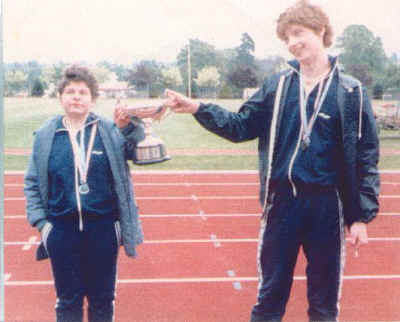
Seaforth Home Adult Training Centre 1974

Attribution: unknown
Attribution: unknown
More memories ....
In May 2018 RCHS was contacted by Heather Anderson who, as a 15 year old in 1963, was Nurse Heather Booth in the Seaforth Children’s Home, as was her sister earlier (see Shirley Maureen Booth above). Although the photographs include Heather with the children, only Heather can feature. In explanation of this: RCHS has, in the past, received permission to reproduce the photographs featured above but does not have permission from children featured in photographs with Heather Booth.

Attribution: unknown
View more photos relating to the Seaforth Sanitorium
Click on photo album to view thumbnails and then click thumbnail to see the full size images


![Estate cars [possibly outside The Laundry]](https://www.rossandcromartyheritage.org/wp-content/uploads/wppa/thumbs/3303.jpg?ver=107 "Estate cars [possibly outside The Laundry]")


